

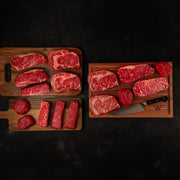

When most people think about beef fat, they picture thick white strips clinging to the edge of a steak—something to trim off and discard. But wagyu beef fat is an entirely different ingredient, one that’s woven throughout the muscle in delicate ribbons of intramuscular marbling that transform every bite into something extraordinary.
At Booth Creek Wagyu, we raise fullblood Wagyu cattle in the Flint Hills of Kansas, controlling every step from genetics to processing to retail. This vertical integration means the fat in our beef isn’t just rich—it’s consistent, traceable, and optimized for both flavor and composition. Unlike conventional beef, Wagyu fat begins to soften at temperatures below body heat, creating that signature melt-in-the-mouth experience while delivering a fatty acid profile that may surprise you.
This guide is for home cooks and food enthusiasts who want to understand why Wagyu beef fat is both a culinary and nutritional standout. Understanding Wagyu beef fat matters because it offers unique health benefits and flavor qualities that can elevate everyday cooking and support a more health-conscious approach to enjoying beef.
Why should you care about Wagyu fat?
-
Higher monounsaturated fat content than standard beef
-
A lower melting point that creates buttery texture and easier rendering
-
Intense, clean beef flavor with pronounced umami
-
Versatility as a cooking fat, finishing ingredient, and pantry staple
What Makes Wagyu Fat Different from Regular Beef Fat?
Walk into any grocery store and pick up a USDA Choice or Select steak. You’ll see a fat cap around the edge and perhaps a few streaks of white running through the meat. Now compare that to a fullblood Wagyu ribeye graded at BC30 or BC40 on our marbling scale—the difference is immediately visible. The fat isn’t sitting on the outside waiting to be trimmed; it’s distributed throughout the muscle in intricate webs that look almost like fine lacework.
This intramuscular marbling is what separates Wagyu from commodity beef. The fat melts at remarkably low temperatures—often starting around 77-86°F—which means it begins liquefying the moment it hits your tongue. That’s why properly prepared Wagyu feels buttery rather than greasy, and why the rendered tallow has a softer, more approachable texture than standard beef fat.

Key differences at a glance:
-
Marbling distribution: Wagyu fat is intramuscular (within the muscle), not just subcutaneous (around the edge)
-
Melting point: Begins softening below body temperature vs. standard beef fat that stays firm
-
Texture when rendered: Softer, less waxy, with a cleaner mouthfeel
-
Source options: Back fat, trim fat, and internal fat can all be rendered into tallow, each with slightly different flavor intensities
What is Beef Tallow?
Beef tallow is a traditional cooking oil made by rendering beef fat, often sourced from grass-fed or humanely raised cattle. This process transforms raw beef fat into a smooth, shelf-stable tallow that’s prized for its high smoke point and rich, savory flavor. Unlike many plant-based oils, beef tallow can withstand high heat cooking, making it the ultimate ingredient for deep frying, searing steaks, roasting veggies, and even baking crispy potatoes or savory baked goods.
What sets beef tallow apart is its ability to deliver great flavor without overpowering the natural taste of your food. Its milder flavor compared to lard and its robust, beefy undertones make it a favorite among chefs and home cooks alike. Whether you’re frying up a batch of golden french fries or using it as a base for sauces and gravies, beef tallow adds a depth of flavor that elevates any dish.
Nutritionally, beef tallow is rich in fat soluble vitamins like A, D, E, and K, and provides a concentrated source of energy. Some studies suggest that consuming beef tallow may offer anti-inflammatory benefits, especially when it comes from high-quality, humanely sourced cattle.
Compared to olive oil, beef tallow boasts a higher smoke point, making it more stable for high heat applications such as searing, frying, and roasting. It’s also a versatile alternative to butter in both cooking and baking, lending structure and moisture to baked goods while imparting a subtle, savory richness.
Wagyu beef tallow, in particular, is highly sought after for its exceptional quality and flavor. Rendered from the marbled fat of Wagyu beef, it offers a uniquely clean, buttery taste and a luxurious mouthfeel. This makes Wagyu beef tallow perfect for searing steaks, roasting veggies, and creating crispy potatoes with a restaurant-quality finish. Its high heat stability and nutrient-rich profile make it a standout choice for anyone looking to enhance their cooking with a premium, flavorful fat.
Whether you’re looking to fry, bake, roast, or sauté, beef tallow is a versatile, nutrient-dense cooking fat that brings out the best in your favorite recipes. With its rich flavor, high smoke point, and culinary flexibility, it’s no wonder beef tallow—and especially Wagyu beef tallow—has become a staple for those who value both taste and quality in the kitchen.
The Surprising Health Benefits of Wagyu Beef Fat
For decades, dietary advice told us to avoid animal fat at all costs. But the science has evolved, and so has our understanding of which fats actually matter. Not all saturated fat behaves the same way in your body, and Wagyu fat has a composition that challenges old assumptions.
Wagyu beef fat has an exceptionally high concentration of monounsaturated fatty acids (up to 300% more than conventional beef). Monounsaturated fatty acids are a type of healthy fat that can help improve cholesterol levels and support heart health.
The dominant fatty acid is oleic acid, which helps lower LDL cholesterol and raise HDL cholesterol. About 40% of the saturated fat in Wagyu is stearic acid, which does not raise the risk of heart disease like other saturated fats do.
Wagyu fat contains higher levels of conjugated linoleic acid (CLA), which is associated with immune support and weight management. Wagyu beef fat is also rich in omega-3 and omega-6 fatty acids, promoting cardiovascular health and reducing inflammation. Additionally, Wagyu fat has a lower melting point (approximately 24°C or 75°F), making it easier for the body to digest.
Definitions:
-
Monounsaturated fatty acids: A type of healthy fat found in high concentrations in Wagyu beef fat (up to 300% more than conventional beef), known for supporting heart health and improving cholesterol levels.
-
Oleic acid: The main monounsaturated fatty acid in Wagyu fat, which helps lower LDL ("bad") cholesterol and raise HDL ("good") cholesterol.
-
Stearic acid: About 40% of the saturated fat in Wagyu is stearic acid, a type of saturated fat that does not raise the risk of heart disease like other saturated fats.
-
CLA (Conjugated Linoleic Acid): A fatty acid found in higher levels in Wagyu fat, associated with immune support and weight management.
Specific Health Benefits of Wagyu Beef Fat:
-
Rich in omega-3 and omega-6 fatty acids, promoting cardiovascular health and reducing inflammation
-
Contains higher levels of conjugated linoleic acid (CLA), which is associated with immune support and weight management
-
Lower melting point (approximately 24°C or 75°F), making it easier for the body to digest
-
Helps lower LDL cholesterol and raise HDL cholesterol due to its high concentration of oleic acid
-
About 40% of the saturated fat is stearic acid, which does not raise the risk of heart disease
-
Exceptionally high concentration of monounsaturated fatty acids (up to 300% more than conventional beef)
What does this mean practically? Wagyu fat typically contains:
-
Higher monounsaturated fat content that may support healthier cholesterol profiles
-
A more favorable ratio of unsaturated to saturated fat compared to commodity beef
-
Less saturated fat per gram of total fat than many grain-finished conventional cuts
-
Naturally occurring CLA (conjugated linoleic acid) along with small amounts of omega-3 and omega-6 fatty acids
-
Better absorption of fat soluble vitamins like A, D, E, and K when consumed as part of a meal
Compared to butter, Wagyu tallow can offer less saturated fat and cholesterol while still providing rich flavor for high heat cooking. It’s not a magic health food—but when you’re choosing a cooking fat, the composition matters.
Note: This information is for educational purposes and not medical advice. Consult a healthcare professional for personalized nutrition guidance.
Key takeaways:
-
Wagyu fat has a fatty acid profile closer to olive oil than typical beef
-
Higher MUFAs may support cardiovascular health when consumed in moderation
-
The composition challenges outdated “all animal fat is bad” thinking
-
Anti-inflammatory benefits from balanced omega fatty acids add another dimension
Flavor Profile: How Wagyu Fat Tastes and Cooks
Close your eyes and imagine biting into a perfectly seared Wagyu steak. The first thing you notice isn’t just tenderness—it’s a rich, buttery sweetness that coats your palate without leaving a heavy, greasy residue. There’s pronounced umami, a savory depth that lingers, and something almost nutty in the finish.
This flavor comes directly from the fat composition. The high oleic acid content creates that clean, sweet butteriness, while balanced omega-6 fatty acids contribute subtle grassy notes. Because the marbling is distributed throughout the meat rather than concentrated at the edges, every bite delivers consistent flavor and moisture. Your taste buds experience the same luxurious richness from the first cut to the last.
Distinctive Flavor Attributes of Wagyu Beef Fat:
-
Richer, sweeter, and more umami compared to conventional beef fat
-
Buttery, melt-in-the-mouth texture due to its low melting point
-
Silky, creamy texture that enhances other flavors without overpowering them
-
Acts as a solvent for aromatic compounds, enhancing the natural flavors of beef

When Wagyu fat is rendered into wagyu tallow, the flavor profile shifts but remains distinctive:
-
More aromatic and round compared to standard beef tallow
-
Less waxy or harsh on the tongue when cooled
-
Subtle roasted-nut and browned-butter notes when used for searing steaks
-
Milder flavor than you might expect from rendered animal fat, making it versatile in the kitchen
Concrete examples of flavor impact:
-
A seared ribeye finished in Wagyu tallow develops deeper caramelization and savory complexity
-
Smashed crispy potatoes fried in Wagyu fat taste richer than those cooked in vegetable oil
-
Roasted root veggies pick up subtle meaty undertones that complement their natural sweetness
-
A savory pie crust made with Wagyu tallow has more structure and great flavor than one made with shortening alone
Wagyu Tallow vs. Other Cooking Fats
Wagyu tallow deserves a spot on your shelf alongside olive oil, ghee, and butter—not as a replacement, but as a premium option for specific applications. Understanding where it excels helps you use it strategically.
Unlike neutral oils that add nothing to a dish, wagyu beef tallow brings its own character. Unlike butter, it won’t burn as quickly and contains no dairy. Unlike generic beef tallow from commodity cattle, it has that superior fatty acid profile and cleaner taste.
|
Fat Type |
Smoke Point |
Flavor Profile |
Best Uses |
|
Wagyu Tallow |
350-400°F |
Rich, buttery, clean beef |
Searing, roasting, frying |
|
Butter |
300-350°F |
Creamy, dairy-forward |
Sautéing, baking, finishing |
|
Olive Oil |
375-410°F |
Fruity, peppery |
Dressings, low-heat sautéing |
|
Generic Beef Tallow |
400°F+ |
Heavy, waxy, pronounced beef |
Deep frying, high-heat cooking |
|
Lard (from pigs) |
370°F |
Neutral to porky |
Baking, frying |
The high smoke point makes wagyu tallow excellent for searing and deep frying without the off-flavors that develop when oil breaks down.
Culinary Uses: How to Cook with Wagyu Beef Fat at Home
You don’t need to buy a full Wagyu steak every night to enjoy the benefits of this fat. A small jar of tallow or saved pan drippings can elevate everyday cooking in ways that feel almost disproportionate to the effort involved.
High-Heat Applications
The high heat stability of wagyu tallow makes it ideal for:
-
Searing steaks: A thin layer in a screaming-hot cast iron pan creates superior crust on any cut of meat
-
Pan-roasting chicken thighs or pork chops: The fat bastes the meat while creating crisp, golden skin
-
French fries and crispy potatoes: Shallow-frying in Wagyu tallow produces crunch and depth that oil simply can’t match
-
Grilling: Brush melted tallow on burgers or skewers just before they come off the heat

Roasting and Sautéing
For roasting veggies at 400°F, toss Brussels sprouts, carrots, or mushrooms in a tablespoon of melted Wagyu tallow before they hit the sheet pan. The fat promotes browning while adding a subtle savory note that makes vegetables taste more satisfying.
For everyday sautéing, try:
-
A teaspoon of tallow for scrambled eggs or omelets
-
Melted tallow brushed on a grilled cheese sandwich before it hits the pan
-
A spoonful added to sauces for body and richness
Baking and Savory Pastry
Chilled Wagyu tallow works beautifully in place of shortening:
-
Use it in pot pie crusts or savory tart shells for flakiness with flavor
-
Blend a portion with butter for biscuits or Yorkshire pudding
-
Incorporate into baked goods where you want structure without dairy
The beauty of this cooking fat is its versatility—liquid when warm for frying and searing, soft at room temperature for spreading, and firm when frozen for pastry work.
How Wagyu Fat is Rendered into Tallow (Home & Ranch Approaches)
Rendering is simply the process of slowly melting fat until impurities separate, then straining what remains into a clean, shelf-stable cooking oil. It sounds more intimidating than it is.
At Booth Creek Wagyu, we render our tallow at carefully controlled low temperatures, filtering it multiple times to achieve a pale golden color and neutral, clean taste. The goal is to preserve the fat’s natural qualities without introducing burnt or off-flavors.
Rendered beef tallow, including Wagyu tallow, is also prized as a natural ingredient for making handmade soaps, valued for its skin care benefits.
At-Home Rendering Overview
If you’ve saved trim from your Wagyu steaks or purchased fat specifically for rendering, here’s a simple approach:
-
Prep: Chop chilled Wagyu fat into small, uniform pieces (cold fat cuts more easily)
-
Cook: Place in a slow cooker or heavy pot on the lowest heat setting, lid slightly ajar
-
Wait: Allow to render for 6-8 hours, stirring occasionally to prevent scorching
-
Strain: Pour through fine mesh or cheesecloth into clean glass jars
-
Cool: Let come to room temperature before sealing
Wagyu fat’s low melting point makes it particularly forgiving for home rendering. The key is patience—gentle heat produces clean results, while rushing creates harsh, burnt-tasting tallow.
The rendered fat should be pale golden to off-white. If it’s dark brown, the temperature was too high.
Storage, Shelf Life, and Kitchen Safety
Properly rendered wagyu tallow is remarkably shelf-stable, making it a practical pantry staple rather than a fussy specialty ingredient.
Storage guidelines:
-
Short-term (several weeks): Store in clean, airtight glass jars in a cool, dark pantry
-
Medium-term (several months): Refrigerate for extended freshness; the fridge keeps it firm and easy to scoop
-
Long-term (6+ months): Freeze in portion-sized containers, labeling with dates for easy rotation
Keep your tallow free from food particles—strain thoroughly after each use if you’ve been frying, and never return used fat to a jar of fresh tallow. Moisture and contaminants reduce shelf life and introduce off-flavors.
Basic safety reminders:
-
Never leave hot fat unattended on the stove
-
Cool rendered fat fully before transferring to storage containers
-
Reheat only the amount you need for each cooking session
-
Keep away from open flame during transfer
How Booth Creek Wagyu Sources and Uses Its Wagyu Fat
At Booth Creek Wagyu, we control every step of the process—and that extends to our fat just as much as our steaks. Our fullblood Wagyu cattle are raised right here in the Flint Hills of Kansas, where we own the genetics, manage the feedlots, handle processing, and run our own retail locations.
The same practices that produce our BC30-BC40 marbling scores—careful genetic selection, extended 28-30 month feeding programs, and stress-minimized handling—also determine the quality of our rendered fat. When you purchase Wagyu tallow from us, you’re getting the same humanely sourced, transparently raised product as our premium steaks.

Our process includes:
-
Careful selection and trimming of fat during processing
-
Low-temperature rendering to preserve flavor and composition
-
Multiple filtration steps for clarity and purity
-
Food-safe packaging with no additives or preservatives
In our sampling kitchens at retail locations around the Kansas City metro, we use our own Wagyu fat daily—for searing steaks, finishing roasted vegetables, and demonstrating to customers exactly how this ingredient transforms a dish. It’s education through taste.
You can purchase our Wagyu beef, fat, and tallow online for delivery throughout the continental United States, or visit our brick-and-mortar meat markets to see the product details firsthand, sample our cuts, and learn cooking techniques from our team. Whether you’re stocking your freezer or picking up a meal for tonight, we’re here to help you get the most from every cut.
Serving Ideas and Pairings to Showcase Wagyu Fat
Think of Wagyu fat as a specialty ingredient—a little goes a long way, and the goal is to highlight flavor rather than overwhelm the food.
Simple serving ideas:
-
Finish a grilled strip steak with a small spoonful of melted Wagyu fat and flaky salt
-
Toss hot roasted potatoes in warmed tallow with minced garlic and fresh herbs
-
Brush burgers or skewers with melted fat just before pulling them off the grill
-
Drizzle over a dish of roasted vegetables for added richness
-
Use as the fat base for a savory gravy or pan sauce
Flavor pairings that complement Wagyu fat’s richness:
-
Fresh herbs: Thyme, rosemary, chives, and sage all work beautifully
-
Acidic elements: Pickled onions, a squeeze of lemon, red wine vinegar, or a bright salsa verde
-
Texture contrasts: Charred veggies, crusty bread, crisp salad greens, or a cold pickle
-
Umami boosters: A splash of soy sauce, a grating of parmesan, or a dab of miso
A simple experiment: Next time you make a recipe that calls for butter or oil—roasted vegetables, grilled cheese, fried eggs—swap in Wagyu tallow for one batch. The side-by-side comparison will tell you everything about how this fat burning with flavor can transform familiar food.
Conclusion: A Healthier, More Flavorful Way to Enjoy Beef
Wagyu beef fat challenges everything we thought we knew about animal fats in our diet. With its higher monounsaturated fat content, intense yet clean rich flavor, and remarkable versatility in the kitchen, it’s not just an indulgence—it’s a thoughtful choice for home cooks who refuse to compromise on taste or quality.
Like any rich ingredient, Wagyu fat works best when enjoyed in moderation as part of a balanced approach. But when you choose a well-bred, transparently sourced product like ours at Booth Creek Wagyu, you’re not just treating yourself to great flavor—you’re investing in an ingredient with real substance behind it. From the genetics of our fullblood cattle to the way we render and package our tallow, every decision is made to deliver something worth savoring.
Ready to experience the difference? Explore our selection of Wagyu steaks, roasts, and rendered tallow online or visit one of our Kansas City-area meat markets. Start simple: save the drippings from your next Wagyu steak, or pick up a jar of our ready-to-use tallow. Then try it on something familiar—crispy potatoes, a pan of eggs, or a simple seared steak. One spoonful, and you’ll understand why we believe Wagyu fat is the ultimate ingredient for serious home cooks.