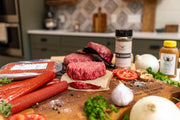
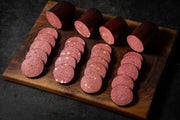
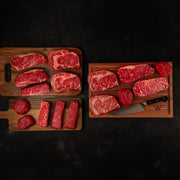

What happens when you combine the legendary marbling of Japanese wagyu cattle with the robust, beefy flavor of premium American angus cattle? You get American Wagyu beef—a crossbred masterpiece that delivers the buttery texture and rich marbling of Japanese genetics alongside the substantial, steakhouse-worthy bite that American steak lovers crave.
American Wagyu is sought after by chefs and home cooks alike as one of the world's most premium ingredients, prized for its exceptional marbling and flavor.
At Booth Creek Wagyu, we’ve built our entire operation around this philosophy. Based in the Flint Hills of Kansas, we’re a vertically integrated wagyu operation—meaning we control everything from genetics and ranching to processing and retail. We raise both fullblood Wagyu and American Wagyu (Wagyu-Angus crosses), giving our customers access to the full spectrum of premium beef.
This article will walk you through everything you need to know about American Wagyu: the genetics behind its exceptional marbling, how it compares to pure Japanese wagyu, what makes it a smart choice for health conscious consumers, and how to buy and cook it at home. Whether you’re new to wagyu beef or looking to deepen your understanding, you’ll leave knowing exactly why American Wagyu represents the best of both worlds.
For home chefs who want A5-style tenderness but also classic steakhouse texture and full-plate portion sizes, American Wagyu hits the sweet spot perfectly.
What Is American Wagyu? A Clear Definition
American Wagyu refers to cattle bred from Japanese Wagyu genetics—primarily the Japanese black breed (Kuroge Washu)—crossbred with high-quality U.S. breeds like Black Angus. The result is hybrid cattle that inherit the wagyu breed’s genetic predisposition for intense marbling while gaining the larger frame size and bold beef flavor characteristic of domestic beef.
Wagyu is not a single specific breed, but rather a collective term for four breeds officially recognized in Japan: Japanese Black, Japanese Brown, Japanese Shorthorn, and Japanese Polled. These four breeds were developed from native stock unique to Japan, and during the Meiji Restoration, Japanese cattle were crossbred with European breeds to enhance certain traits such as size and growth efficiency. The Japanese Black breed, in particular, is renowned for its exceptional marbling, which is a defining characteristic of premium Wagyu beef.
This style of beef production emerged seriously in the United States during the late 1970s through the 1990s. The first wagyu cattle were breeds imported to American soil in 1976, and subsequent imports of embryos and semen allowed wagyu breeders to begin crossbreeding programs. When Japan restricted live cattle exports in 1997, American producers had already established foundation herds that would define the American Wagyu category.
At Booth Creek Wagyu, our breeding program focuses on maximizing intramuscular fat distribution while maintaining the cattle size and growth efficiency that make steaks practical for American tables.
You’ll encounter various labels in the marketplace:
-
American Wagyu – Crossbred cattle with documented Wagyu lineage
-
Wagyu cross or Wangus – Informal terms for the same crossbred category
-
Fullblood Wagyu – 100% Wagyu genetics, traceable to Japanese cow ancestry
These crossbred cattle aren’t pure Japanese A5, but they far exceed conventional USDA Prime in marbling and tenderness.
Booth Creek Wagyu also raises fullblood Wagyu cattle, which means American Wagyu sits between fullblood Wagyu and premium Angus on the flavor-marbling spectrum—offering an accessible entry point to wagyu excellence without sacrificing the steak experience Americans love.
Japanese Wagyu vs. American Wagyu: The Flavor Spectrum
Pure Japanese Wagyu and American Wagyu occupy different positions on the beef flavor spectrum, and understanding these differences helps you choose what belongs on your table.
Japanese Wagyu—particularly A4 and A5 grades—is characterized by extremely fine, dense marbling that creates an almost overwhelmingly rich eating experience. The fat melts at lower temperatures, delivering intense umami and a melt in your mouth sensation that’s unlike any other red meat. In Japan, this highly prized beef is traditionally eaten in thin slices or small portions because its richness is best savored in moderation.

American Wagyu takes a different approach. The Angus influence creates a looser but still abundant marbling pattern, with a stronger “beefy” backbone flavor. These steaks perform beautifully in 10–16 oz ribeyes, strips, and tomahawks—the kinds of cuts that anchor a great American steakhouse meal.
Key differences at a glance:
|
Characteristic |
Japanese Wagyu (A4-A5) |
American Wagyu |
|
Marbling density |
Extremely fine, web-like |
Abundant but looser |
|
Flavor profile |
Intensely rich, umami-forward |
Balanced beef-forward with richness |
|
Typical portion |
3-6 oz thin slices |
10-16 oz steaks |
|
Best preparation |
Yakiniku, shabu-shabu, small steaks |
Grilling, searing, steakhouse cuts |
|
Price point |
Often $200+/lb for A5 Kobe |
Premium but more accessible |
One important clarification: “American Kobe” is purely a marketing term with no official designation. The Japanese government highly regulated the use of “Kobe beef” as a protected term referring only to cattle raised in Japan’s Hyogo Prefecture. “American Wagyu,” by contrast, refers to cattle with documented Wagyu lineage raised on American farms.
Booth Creek Wagyu’s approach uses elite Wagyu genetics to maximize that exceptional marbling while still delivering the substantial bite American steak lovers expect.
How American Wagyu Balances Richness and Beefiness
When you cut into a properly prepared American Wagyu steak, you’ll notice pronounced marbling throughout the meat—those signature white striations of intramuscular fat that promise juicy, flavorful bites. But unlike ultra-rich A5 cuts that can feel almost overwhelming in larger portions, American Wagyu maintains enough texture and “chew” to feel like a classic Kansas City steak.
This balance makes American Wagyu uniquely versatile, especially in richly marbled Wagyu ribeye steaks:
-
Full-plate ribeyes that remain juicy throughout without being greasy
-
Strip steaks with pronounced beef flavor enhanced by rich marbling
-
Ground wagyu for burgers with visible fat distribution and elevated juiciness
The crossbreeding process tempers Japanese wagyu’s extreme richness with Angus-derived boldness. You can enjoy a 14-ounce American Wagyu ribeye as a complete meal, whereas a comparable portion of A5 might be better shared among multiple diners.
Our customers at Booth Creek Wagyu often describe the experience as “A5-level tenderness with Midwestern steakhouse flavor”—and that’s exactly what natural american wagyu beef delivers when the genetics and raising practices are handled correctly.
From Genetics to Plate: How Booth Creek Wagyu Raises American Wagyu
The excellence of American Wagyu doesn’t happen by accident. It requires control over every stage of production—from the genetics that determine marbling potential to the final cut that reaches your kitchen.
Booth Creek Wagyu operates as a vertically integrated beef company in the Flint Hills of Kansas. We own the genetics, manage the breeding, oversee feedlot operations, process the animals, and sell directly through our retail locations and online store—an approach you can explore in depth on our About Booth Creek Wagyu story. This ranch-to-retail model ensures consistency and traceability that most beef suppliers simply cannot match.

Our breeding program starts with selecting Wagyu sires proven to transmit superior marbling genetics. We pair these with Angus dams chosen for growth efficiency, temperament, and carcass quality. The resulting calves inherit the best traits from both lineages—the wagyu breed’s naturally high capacity for intramuscular fat alongside the Angus’s robust frame and feed efficiency.
Key elements of our raising program:
-
Extended finishing periods – American Wagyu cattle are typically fed for 600-800 days, compared to approximately 400 days for commodity beef, allowing maximum marbling development
-
Carefully balanced rations – Feed programs designed to support intramuscular fat without excessive external fat deposits
-
Low-stress handling – Calm, consistent animal management directly impacts meat tenderness
-
Open-air pastures – Natural environments in Kansas’s Flint Hills region
Our cows are managed in a stress-free environment, which is essential for producing high-quality Wagyu beef.
This attention to animal welfare isn’t just ethical—it’s essential for producing beef that’s exceptionally tender and flavorful. Stressed animals produce tougher meat; well-cared-for cattle produce better marbling.
Because we control every step, we can guarantee that the American Wagyu steak you purchase from Booth Creek Wagyu is exactly what we say it is: premium beef from documented genetics, raised with care, processed with precision, and delivered with complete traceability.
Marbling, Grading, and the Booth Creek BC Scale
Marbling is the single most important quality factor in wagyu and American Wagyu beef. Those fine streaks of intramuscular fat—called sashi in Japanese—create the buttery texture, rich flavor, and juiciness that distinguish premium wagyu from ordinary beef.
It’s important to understand what marbling actually is:
-
Intramuscular fat – Fat distributed within the muscle fibers, appearing as white striations
-
External fat cap – Fat on the outside of the muscle, trimmed before cooking
High-quality marbled meat features abundant intramuscular fat while avoiding excessive external fat. This creates steaks that cook up tender and juicy without being fatty or wasteful.
Japanese beef is graded on the BMS (Beef Marbling Standard) scale from 1-12, with A5 beef typically scoring BMS 8-12. American USDA grading uses categories like Select, Choice, and Prime—but even Prime only captures a fraction of the marbling potential that Wagyu genetics can achieve.
To provide our customers with clearer guidance, Booth Creek Wagyu developed our own BC marbling scale ranging from BC10 to BC40:
|
BC Grade |
Marbling Level |
Best For |
|
BC10-BC20 |
High Choice to Prime-level |
Elevated weeknight dinners, everyday celebrations |
|
BC30 |
Very high Wagyu-style marbling |
Special occasions, dinner parties |
|
BC40 |
Exceptional marbling exceeding most U.S. beef |
Ultimate luxury experiences |
A BC30 ribeye displays abundant spiderweb marbling ideal for anniversaries or holiday centerpieces. A BC20 strip steak delivers elevated flavor perfect for a Tuesday night dinner that feels special.
Every product at our meat markets and online store clearly indicates its BC grade, so you can choose your preferred richness level with confidence.
Health and Nutrition: The Better-Fat Profile of American Wagyu
Yes, wagyu beef is “fatty”—but not all fat is created equal. The type of fat in American Wagyu differs significantly from conventional beef, offering a more favorable nutritional profile that matters to health conscious consumers.
Wagyu genetics create a higher ratio of monounsaturated fatty acids to saturated fat. A 2020 study published in the Journal of Animal Science found that American Wagyu contains elevated levels of oleic acid (the same heart-healthy fat found in olive oil), along with higher concentrations of Omega-3 and Omega-6 fatty acids compared to conventional beef—key traits that define authentic Wagyu beef.
Nutritional advantages of American Wagyu fat:
-
Lower melting point – Fat renders at lower temperatures, creating that melt-in-your-mouth sensation while reducing the “heavy” feeling of saturated fats
-
Higher monounsaturated content – Research associates monounsaturated fats with more favorable cholesterol profiles
-
Linoleic acid presence – An essential fatty acid that the body cannot produce on its own
-
Better omega ratios – Improved Omega-3 and Omega-6 levels compared to standard red meat
At Booth Creek Wagyu, our cattle diets and slow finishing encourage marbling that distributes finely throughout the muscle rather than accumulating as thick external fat layers. This means more of the fat you’re eating is the good stuff—the marbling that delivers flavor and nutrition rather than the trim waste that ends up in the garbage.
American Wagyu represents a “quality-over-quantity” approach to beef: richer satisfaction per ounce encourages mindful portions.
For steak lovers who want exceptional taste without sacrificing nutritional awareness, American Wagyu beef offers a smarter indulgence than loading up on conventional steaks.
Fullblood vs. American Wagyu: Choosing What Fits Your Table
Understanding the difference between fullblood Wagyu and American Wagyu helps you choose the right product for your specific occasion.
Fullblood Wagyu:
-
100% Wagyu genetics traceable to japanese cattle ancestry
-
Even more intense marbling and delicacy
-
Best for ultra-luxury tasting experiences or small shared steaks
-
Prepared in thinner slices to balance extreme richness
-
Higher price point reflecting pure genetics
American Wagyu:
-
Wagyu-Angus crossbred (typically 50-75% Wagyu blood)
-
Excellent marbling with stronger beef backbone
-
Better suited for full steaks, grilling for crowds, everyday celebrations
-
More accessible price point
-
Larger portions remain enjoyable
When should you choose each?
|
Occasion |
Recommended Choice |
|
Intimate tasting dinner for 2 |
Fullblood Wagyu |
|
Backyard BBQ for family |
American Wagyu |
|
Anniversary celebration steak |
Fullblood or high-BC American Wagyu |
|
Weeknight dinner upgrade |
American Wagyu BC20-BC30 |
|
Wagyu burgers for a crowd |
American Wagyu ground beef |
Booth Creek Wagyu offers both fullblood and American Wagyu options, allowing customers to compare and find their personal sweet spot between intensity and practicality.
Signature American Wagyu Cuts and How to Cook Them
Booth Creek Wagyu offers a full range of American Wagyu steak cuts, from center-of-the-plate steaks to versatile options for smoking, braising, and everyday cooking.
Boneless Ribeye
|
Cut |
Characteristics |
Best Preparation |
|
Boneless Ribeye |
Rich marbling, intense beefy flavor |
High-heat sear, reverse sear |
New York Strip
|
Cut |
Characteristics |
Best Preparation |
|
New York Strip |
Firm texture, bold taste |
Cast-iron searing |
Filet Mignon (Tenderloin)
|
Cut |
Characteristics |
Best Preparation |
|
Filet mignon (Tenderloin) |
Exceptionally tender, subtle sweetness |
Quick sear, compound butter |
Denver Steak
|
Cut |
Characteristics |
Best Preparation |
|
Denver Steak |
Well-marbled, underrated value |
Grill or pan sear |
Sirloin
|
Cut |
Characteristics |
Best Preparation |
|
Sirloin |
Leaner but flavorful |
Marinade and grill |
Tomahawk
|
Cut |
Characteristics |
Best Preparation |
|
Tomahawk |
Dramatic presentation, bone-in ribeye |
Reverse sear, special occasions |
Versatile Cuts for Low-and-Slow
-
Tri-tip – Perfect for smoking or high-heat roasting
-
Chuck roast – Ideal for braising, pot roasts, and stews
-
Short ribs – Exceptional when braised or smoked until tender
-
Brisket – The ultimate weekend smoking project
Ground Wagyu
Don’t overlook ground wagyu for burgers, meatballs, and chili. The visible marbling throughout creates burgers with elevated juiciness that standard 80/20 ground beef simply cannot match. The rich flavor profile means you need less seasoning—the meat speaks for itself, especially when you follow a dedicated Wagyu steak cooking guide to handle the marbling properly.

Our brick-and-mortar retail locations include a sampling kitchen where guests can taste prepared American Wagyu dishes and learn cooking techniques directly from our team. It’s one thing to read about how exceptional this beef is—it’s another to experience it firsthand.
Simple Cooking Guidelines for American Wagyu at Home
Before Cooking
-
Remove steaks from refrigeration 30-45 minutes before cooking.
-
Pat completely dry with paper towels.
-
Season simply with kosher salt and freshly cracked black pepper—the meat’s natural flavor does the heavy lifting.
Searing Approach
-
Use a cast-iron skillet or grill preheated to medium-high (not screaming hot, as the fat renders quickly).
-
Sear 2-3 minutes per side for 1-inch steaks, adjusting for thickness.
-
The marbling will render during cooking, creating natural basting.
Target Temperatures
|
Doneness |
Internal Temp |
Notes |
|
Rare |
120-125°F |
Cool red center |
|
Medium-rare |
125-130°F |
Warm red center—our recommendation |
|
Medium |
130-135°F |
Pink center, still juicy |
|
Beyond medium |
Not recommended |
Higher temperatures compromise tenderness |
Resting
-
Allow steaks to rest 5-10 minutes before slicing. This lets juices redistribute throughout the meat, ensuring every bite is as juicy as possible. Thicker cuts benefit from longer rest times.
Preparation Ideas
Two preparation ideas to try:
-
Cast-iron seared ribeye with garlic-herb butter – Sear a BC30 ribeye, then top with a compound butter of softened butter, minced garlic, and fresh thyme. Let the butter melt over the resting steak.
-
Smoked American Wagyu brisket – Low and slow at 225°F until the internal temperature reaches 195-203°F. The exceptional marbling keeps the meat moist throughout the long cook.
Explore the recipes Booth Creek Wagyu shares online or visit our sampling kitchen for more detailed cooking inspiration from our team.
Certification and Labeling: Ensuring Authenticity in American Wagyu
In the world of premium beef, authenticity is everything—especially when it comes to highly prized American Wagyu. With the growing popularity of wagyu beef and its reputation for intense marbling, rich flavor, and exceptionally tender texture, it’s more important than ever for health conscious consumers to know exactly what they’re buying. That’s where certification and labeling come into play.
American Wagyu Association
The American Wagyu Association (AWA) stands at the forefront of ensuring that American Wagyu beef lives up to its name. As the primary registry for wagyu cattle in the United States, the AWA verifies that cattle meet strict breed standards, including a minimum of 50% wagyu genetics.
This process often involves DNA testing to confirm the wagyu breed, guaranteeing that the beef you enjoy truly comes from cattle with the genetic predisposition for the rich flavor profile and intense marbling that set wagyu apart.
USDA Labeling
But the assurance doesn’t stop there. The USDA also regulates how American Wagyu beef is labeled, requiring that any claims about breed, origin, or quality are backed by documentation. Only beef from verified wagyu cattle can be labeled as “Wagyu,” and terms like “Japanese-style” or “Kobe-style” must be supported by clear evidence of genetics and production methods.
This level of oversight helps protect consumers from misleading marketing and ensures that every cut delivers the melt-in-your-mouth tenderness and rich flavor you expect from the highest quality beef.
Third-Party Certifications
Many American Wagyu producers go even further, seeking third-party certifications such as those from the American Grassfed Association or Certified Angus Beef program. These additional labels signal a commitment not only to breed authenticity, but also to animal welfare, environmental sustainability, and nutritional value—qualities that matter to today’s health conscious consumers.
Why does all this matter? As demand for wagyu beef grows, so does the risk of mislabeling and fraud. Proper certification and transparent labeling safeguard the integrity of the American Wagyu industry, ensuring that only beef with the true genetic heritage and exceptional marbling of the wagyu breed reaches your table. For producers, it’s a way to protect their reputation and differentiate their beef from lower-quality alternatives. For consumers, it’s the confidence that every bite delivers the rich flavor, tenderness, and quality you’re seeking.
When you choose American Wagyu beef from certified producers, you’re not just enjoying a premium steak—you’re supporting a system built on transparency, quality, and respect for the unique characteristics of wagyu cattle. Look for the American Wagyu Association seal and other reputable certifications to ensure your next meal features the highest quality, exceptionally tender, and richly marbled beef that has made wagyu a legend among meat lovers worldwide.
How to Buy Authentic American Wagyu from Booth Creek Wagyu
The term “Wagyu” gets used loosely in the American marketplace. You’ll find everything from legitimate crossbred wagyu raised programs to vague labels on imported beef of questionable origin. The introduction of Wagyu genetics to the United States began in the 1970s, with key figures like Morris Whitney instrumental in importing the first Wagyu cattle and establishing the foundation for American Wagyu herds. Buying from transparent, genetics-focused producers is the only way to ensure you’re getting authentic American Wagyu.
Booth Creek Wagyu makes purchasing straightforward through multiple channels:
Online ordering:
-
Individual premium cuts, sampler boxes, and bulk options
-
Clear labeling of American Wagyu vs. fullblood designation
Brick-and-mortar meat markets:
-
Multiple locations in the Kansas City metro area and beyond
-
Education-based retail experience with knowledgeable staff
-
Sampling kitchen to taste before you buy
-
In-person guidance on selecting cuts and cooking methods

Every product clearly indicates whether it’s American Wagyu crossbred or fullblood Wagyu, along with the BC marbling score and specific cut details. No guesswork, no vague marketing—just transparent information so you can choose exactly what fits your meal and budget.
Great starting points for new customers:
-
Sampler boxes – Variety of cuts at different BC grades
-
Steak flights – Compare ribeye, strip, and filet side by side
-
Ground beef bundles – Accessible entry into wagyu quality, alongside specialty options like our Wagyu Coulotte Steak
Our farm-to-table traceability means we know the genetics, feeding history, and processing details of every animal. That’s a level of transparency that major commodity beef suppliers and imported beef simply cannot provide.
Elevating Everyday Meals and Special Occasions
American Wagyu isn’t just for white-tablecloth special occasions—though it certainly excels there. Here’s how to incorporate it into your regular rotation:
Everyday upgrades:
-
American Wagyu burgers for Friday night cookouts (the marbling creates burgers that stay juicy even when cooked through)
-
BC20-BC30 strip steaks for weeknight date dinners
-
Ground wagyu tacos or meatballs that taste noticeably better than standard ground beef
Special occasion centerpieces:
-
BC30-BC40 ribeyes for anniversaries or promotion celebrations
-
Whole tenderloin roasts for holiday gatherings
-
Tomahawk steaks for birthdays and milestone events
-
American Wagyu short ribs braised for dinner parties
Gifting: American Wagyu gift boxes and curated assortments make memorable presents for:
-
Father’s Day
-
Birthdays
-
Corporate thank-yous
-
Holiday gifts
-
Housewarming celebrations
The highest quality beef speaks louder than most gift cards or generic baskets. When someone receives a box of BC30 American Wagyu steaks, they remember it.
American Wagyu represents something genuinely special in the world of beef: the rich flavor profile and better marbling of Japanese wagyu genetics combined with the bold, satisfying taste of premium American cattle. It’s food that delivers both luxury and practicality—highly prized excellence you can actually eat in full portions.At Booth Creek Wagyu, we’ve dedicated our entire operation to producing American Wagyu that lives up to this promise. From the Flint Hills of Kansas to your table, every steak carries the result of careful breeding, patient raising, and uncompromising quality standards.
Whether you’re grilling for your family, celebrating a milestone, or simply want a Tuesday night dinner that tastes extraordinary, American Wagyu from Booth Creek Wagyu delivers the best of both worlds.
Ready to experience the difference? Visit one of our meat markets in the Kansas City area, explore our online store for nationwide shipping, or start with a sampler box to discover your preferred BC grade. Our team is ready to help you bring restaurant-quality American Wagyu into your home kitchen.